When it comes to private mortgage insurance (MI), there are several myths that exist that make buyers reluctant to consider a conventional loan with MI as an option when purchasing a home. One of the more common misconceptions is that cancelling MI is a difficult—not to mention time-consuming—process. By understanding these rules and what they mean for homeowners, real estate agents can educate their buyers to help them better evaluate all of their home financing options based on facts rather than myths.
In this market anxious Sellers will have to price aggressively to get cautious Buyers off the fence. Selleing real estate? Be certain to work with a local, qualified Realtor who knows how to price your home fora quick sale.
In recent days, home mortgage interest rates have ticked up very slightly but are still quite low, well below 5 percent. This spring's low rates have helped boost mortgage applications, both for refinancing and purchases. NPR's Chris Arnold reports on the outlook for the housing sector this summer, and the industry's one bright spot: cheap mortgages.
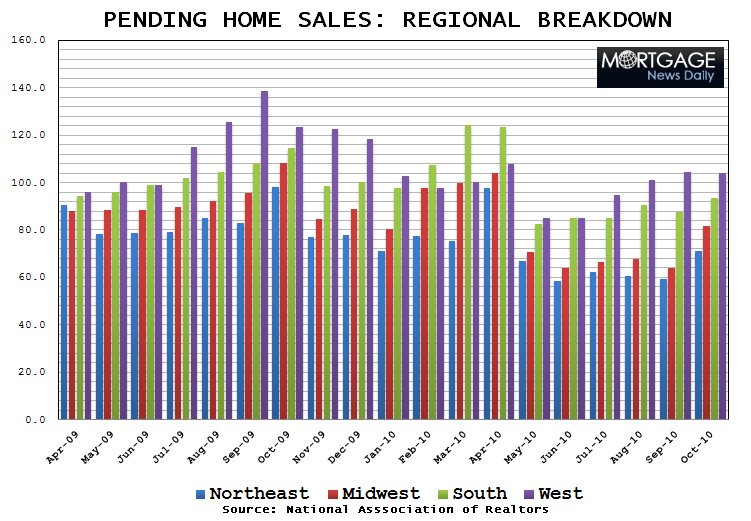
The National Association of Realtors® (NAR) Pending Home Sales Index measures the number of home purchase contracts that were signed in the monthly reporting period. Once “pending” sales contracts are closed, they are considered an Existing Home Sale. Because the Pending Home Sales index tells us how many contracts were signed, it is considered a forward indicator of Existing Home Sales. A signed contract is not counted as an Existing Home Sale until the transaction actually closes.
Enacted in 1994 “The Good Funds Statute” addressed the situation that first arose in the Abbey Financial case, where a lender failed to fund a loan which had already closed, the closing attorney was left in the difficult position of either having closed the loan and refusing to record the papers or having recorded the deed and mortgage and not having the funds to pay off the seller and existing liens. In the case of Abbey Financial, several of the attorneys representing Abbey closed the loan and recorded the papers, including the mortgage, without having the necessary funds to payoff the seller or the existing liens.
The Good Funds Statute M.G.L. c.183, § 63b provides that no mortgagee who makes a loan to be secured by a mortgage, shall cause a mortgage to be recorded with the Registry of Deeds unless prior to the time the mortgage is recorded, the mortgagee has caused the full amount of the proceeds of such loan due to the mortgagor, the mortgagor’s attorney or the mortgagee’s attorney in the form of a certified check, bank treasurer’s check, cashier’s check or transfer of funds. The statute further provides that neither the mortgagor’s attorney or the mortgagee’s attorney shall be required to make disbursements or deliver said proceeds to the mortgagor in such form. The primary purpose of the “Good Funds” statute was to allow consumers and conveyancers to rely on funds at a closing.